
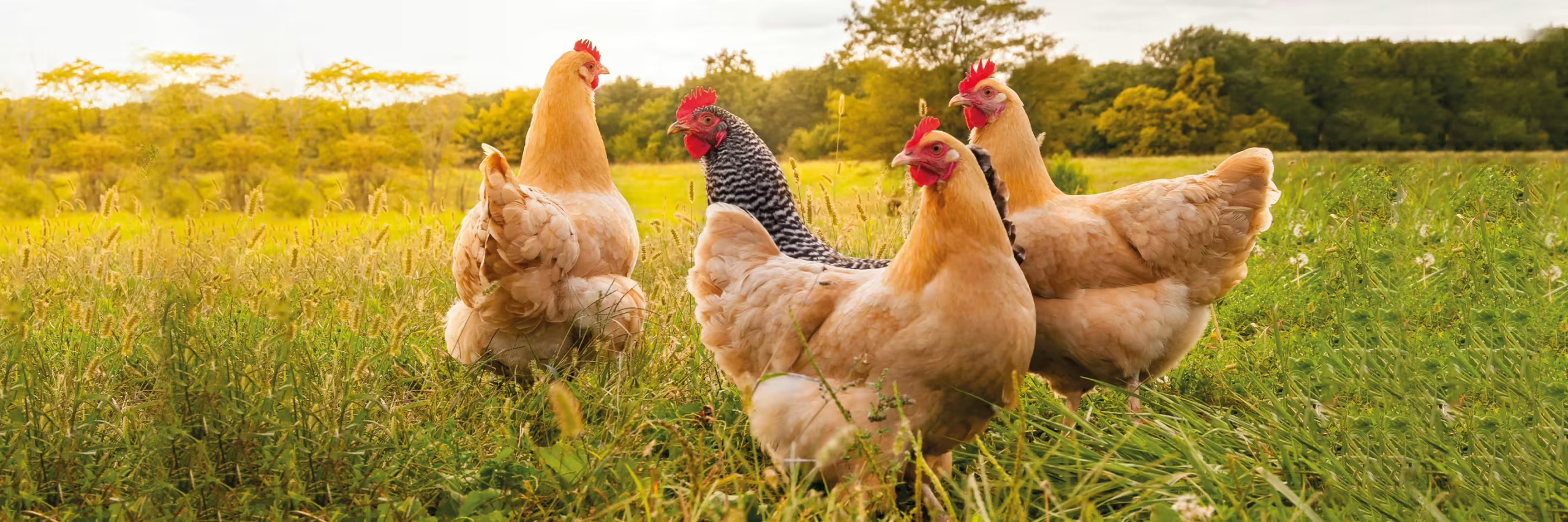
Animal welfare is gaining momentum in Africa, and Kenya is no exception. Recently, the shifts towards a better world for animals have been on the rise. It’s exciting to see like‑minded people like veterinarians, animal welfare enthusiasts, vegans, conservationists, and funders promoting a cruelty‑free world. This shift has been particularly impactful in ensuring that people, industries, consumers, and manufacturers treat animals humanely.
In Kenya, poultry farming is a significant contributor to the agricultural sector, accounting for approximately 30 % of the sector’s GDP and providing vital nutrition and livelihoods for millions of households. Yet the rapid expansion of intensive production has outpaced improvements in how birds are cared for. Layer hens are increasingly kept in battery cages with limited space, preventing them from expressing natural behaviours such as perching, dust‑bathing, nesting and wing‑stretching. Scientific studies show that this behavioural restriction directly harms welfare and can lead to skeletal weakness, behavioural disorders, and chronic stress. Battery cage systems have been widely critiqued in poultry science literature for their inherent welfare limitations compared with enriched or cage‑free systems that allow birds to express a wider repertoire of natural behaviours (FAO, 2023).
Poultry welfare is not only an ethical concern but is rooted in the recognition that birds are sentient and capable of suffering. It is also connected to public health, food safety, and farm productivity. Poor welfare increases vulnerability to disease, stress, and mortality, while also contributing to the prevalence of foodborne pathogens like Salmonella and Campylobacter (ScienceDirect, 2019). Evidence shows that improved housing, enriched environments, and careful handling reduce stress, enhance immunity, and support sustainable production.
Advocacy organisations like Animal Advocacy Africa and The Humane League emphasise reforms such as transitioning to cage‑free systems, farmer training programs, and policy engagement. Effective Altruism principles, as highlighted by Animal Advocacy Careers and Charity Evaluators, stress that targeting high-impact interventions like improving layer hen welfare can reduce suffering at scale.
Call to Action: To promote a humane and sustainable poultry sector in Kenya, stakeholders must support legislative reforms, incentivise farmers to adopt enriched or cage-free systems, and encourage ethical consumer choices. Together, policy-makers, NGOs, and the public can transform poultry farming from a system of suffering into a model of responsible and compassionate agriculture. Improving poultry welfare is not just an ethical duty. it is a scientifically supported strategy to ensure healthier animals, safer food, and stronger communities.
Leave a Reply